How it is built
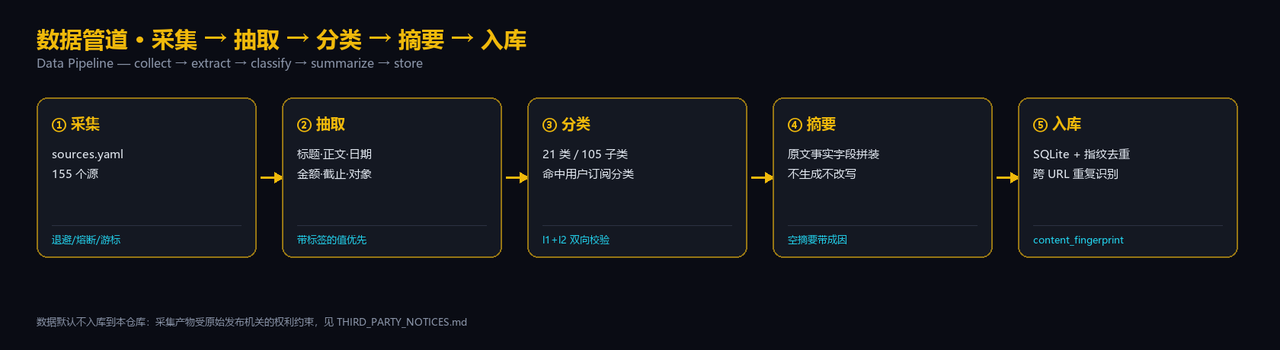
From national ministries to provincial departments and city agencies: continuous collection, extraction, classification and summarisation — public channels only.
What it does and does not do is stated up front: no generated content, no rewriting, no guessing at missing fields. If it cannot extract something it leaves it blank and says why, rather than inventing it.
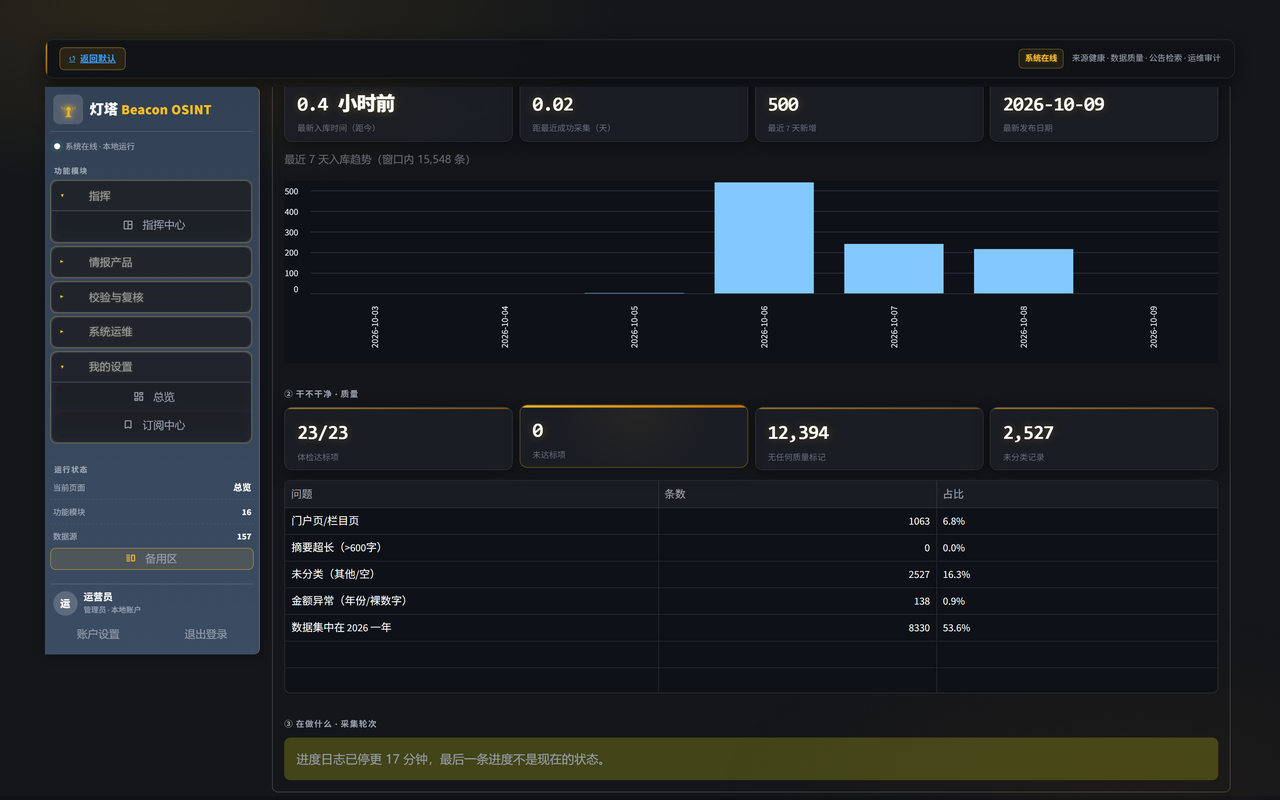
Structured extraction of publication date, amount, deadline, applicant and responsible body — all from labelled values in the original text, never inferred. A body-text fingerprint identifies duplicates across URLs.
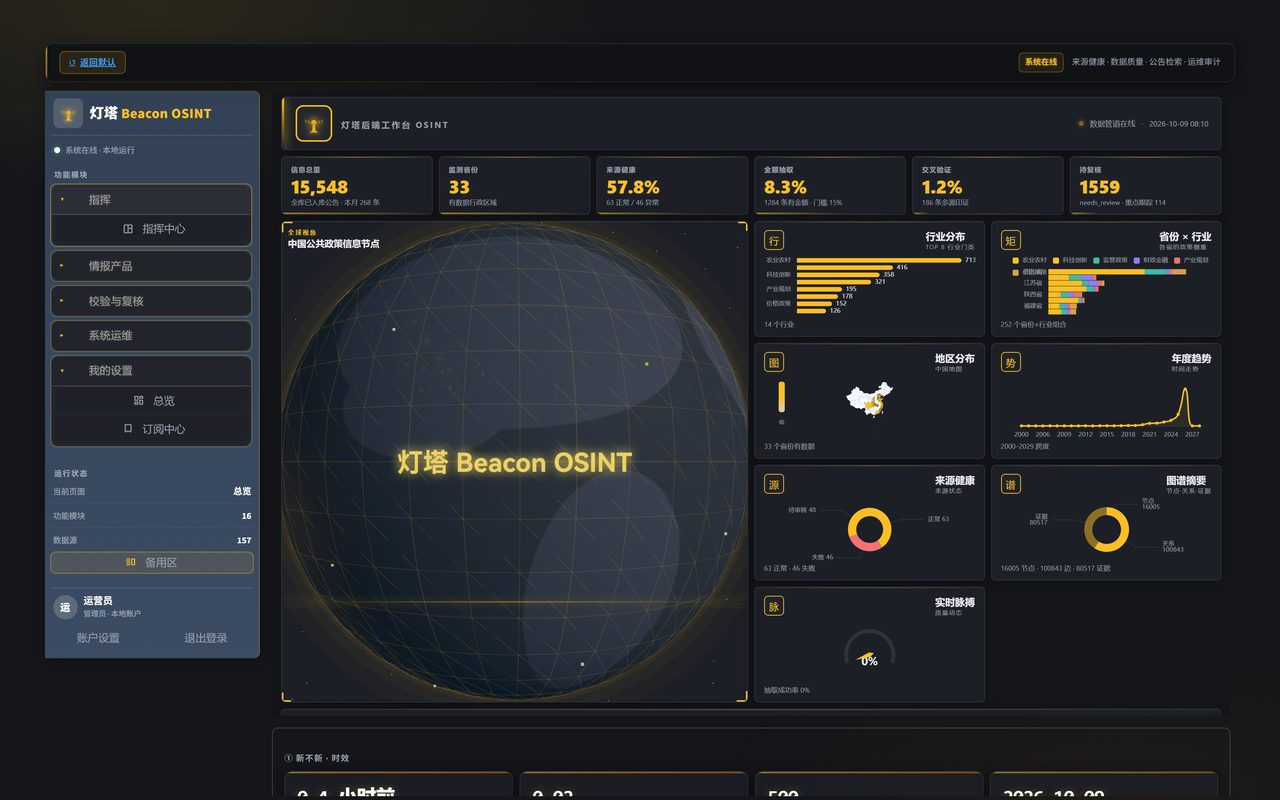
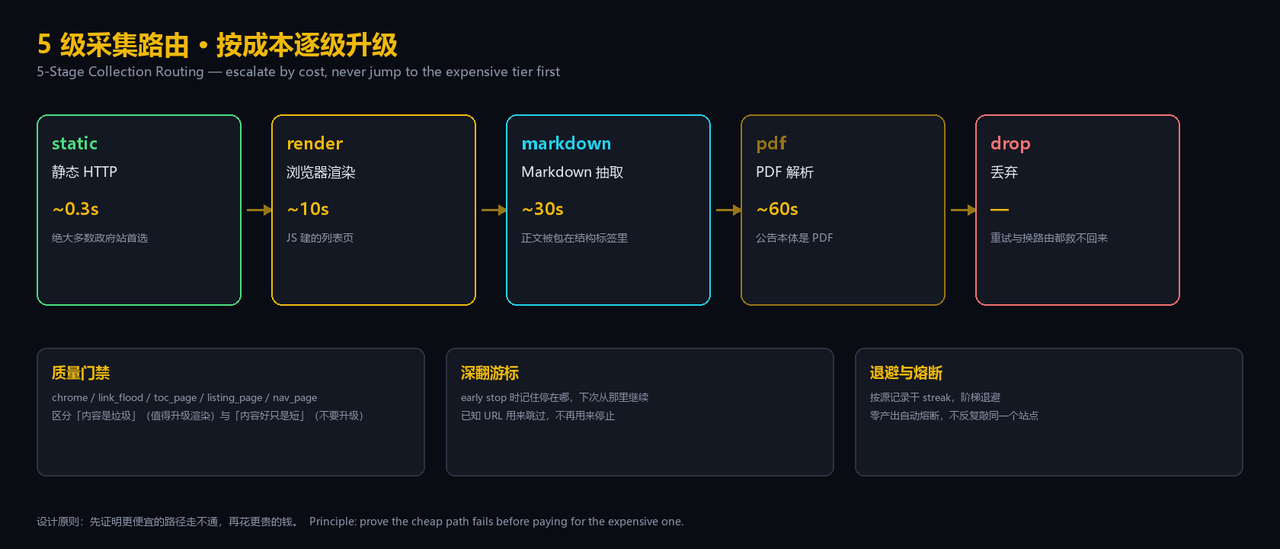
Collection revisits on a backoff schedule and keeps a dry-streak counter per source; a source that stops producing is tripped automatically, so the same site is not hammered. All 155 sources were enabled only after both a list-page probe and a real extraction run.
The interface is a dark theme with gold rules and stays readable in dark mode. The repository contains no collected text and no database; the position is written into the licence: personal use, further development allowed, commercial use not.