蜻蜓伴读
Open sourceWindows / macOS / Linux

TTWriter

The Chinese edition of WordCraft: the full upstream Rust source plus a standards layer for official documents, theses and legal papers. Word counts by character, correct East Asian fonts and language tags in DOCX. Offline, cross-platform, drivable by CLI and MCP.

How it is built

WordCraft is an open-source word processor written from scratch in Rust, built to match Word and go further on speed, openness and programmatic control. TTWriter is its Chinese edition: the repository contains the complete upstream source — not a plugin, not a skin, and not a menu translation.

What we add is the writing-standards layer. Official documents follow GB/T 9704—2012: A4, the standard text area, a 22 pt Xiaobiaosong title, 16 pt FangSong body and a fixed 28 pt line spacing. Theses follow GB/T 7713 and GB/T 7714—2015 for cover, headers and footers, page numbers, contents, figure and table numbering and reference entries. Legal papers cover civil complaints, demand letters, legal opinions, contract review reports and labour arbitration applications.

The rules are executable, not a checklist. Four layout skills and four presets ship as scripts: run them from the CLI, or apply them in the app from Home → Chinese Layout. Both paths dispatch the same commands.

Chinese is also written correctly into the file. Word counts are counted by character, not by splitting on spaces; w:rFonts/@w:eastAsia and w:lang/@w:eastAsia round-trip so Word does not lose the font or the language tag; font names such as 仿宋_GB2312 that do not exist on modern Windows resolve to a font that is actually installed instead of silently falling back to a sans-serif.

It is also an editor that programs can drive: the ribbon, shortcuts, CLI, control channel and MCP all dispatch the same 600+ commands. It runs offline and keeps the manuscript on your machine; native on Windows, macOS, Linux and BSD, plus the web via WASM.

Upstream ships several releases a week. General fixes go back upstream; this repository keeps only the necessary fork and rebases on every release. Next: a Chinese default layer, Chinese proofing, pinyin sorting, Chinese templates and PDF annotations.
Features

What it does

No need to open GitHub — this page spells it out.

01

Official documents: GB/T 9704—2012

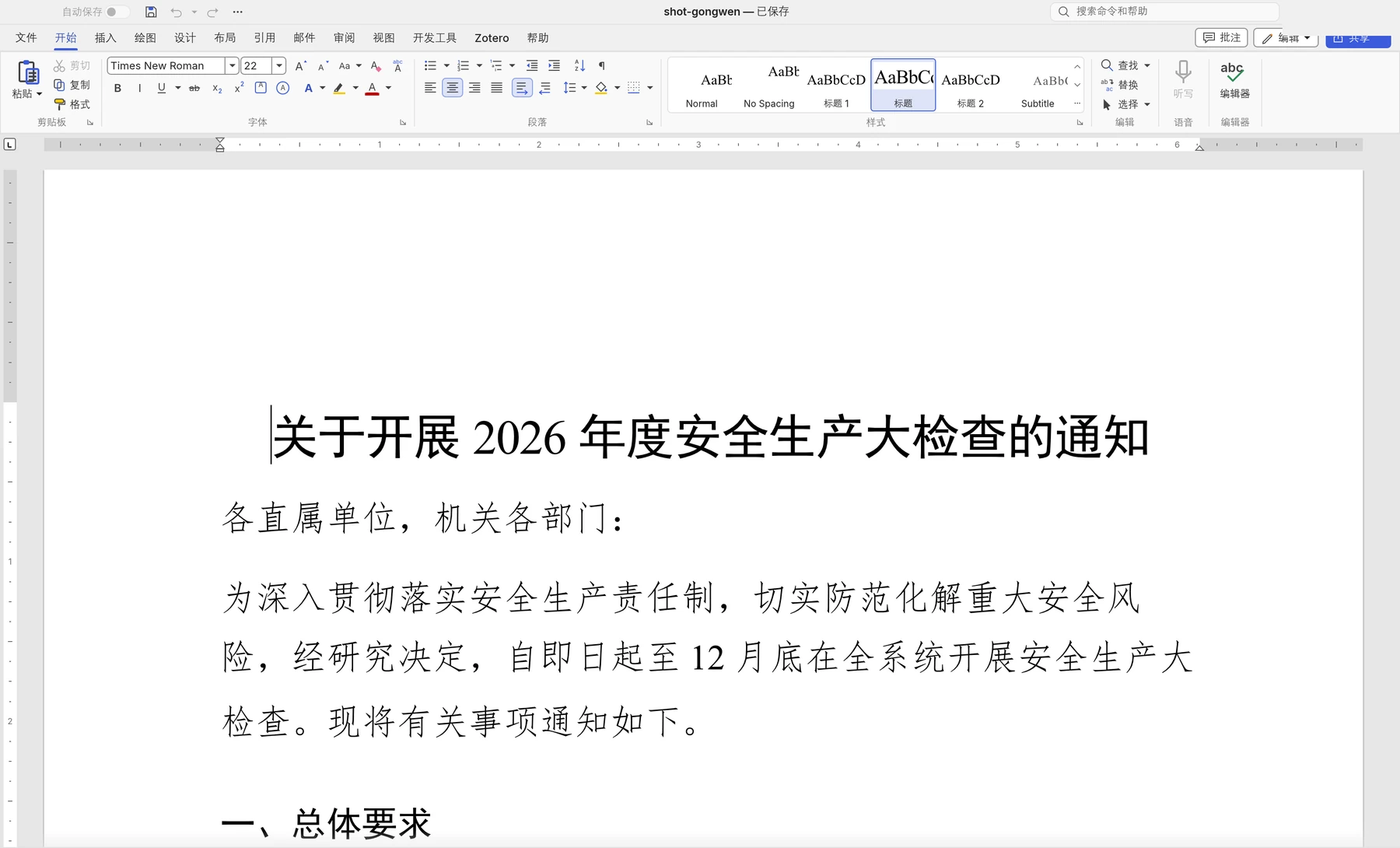
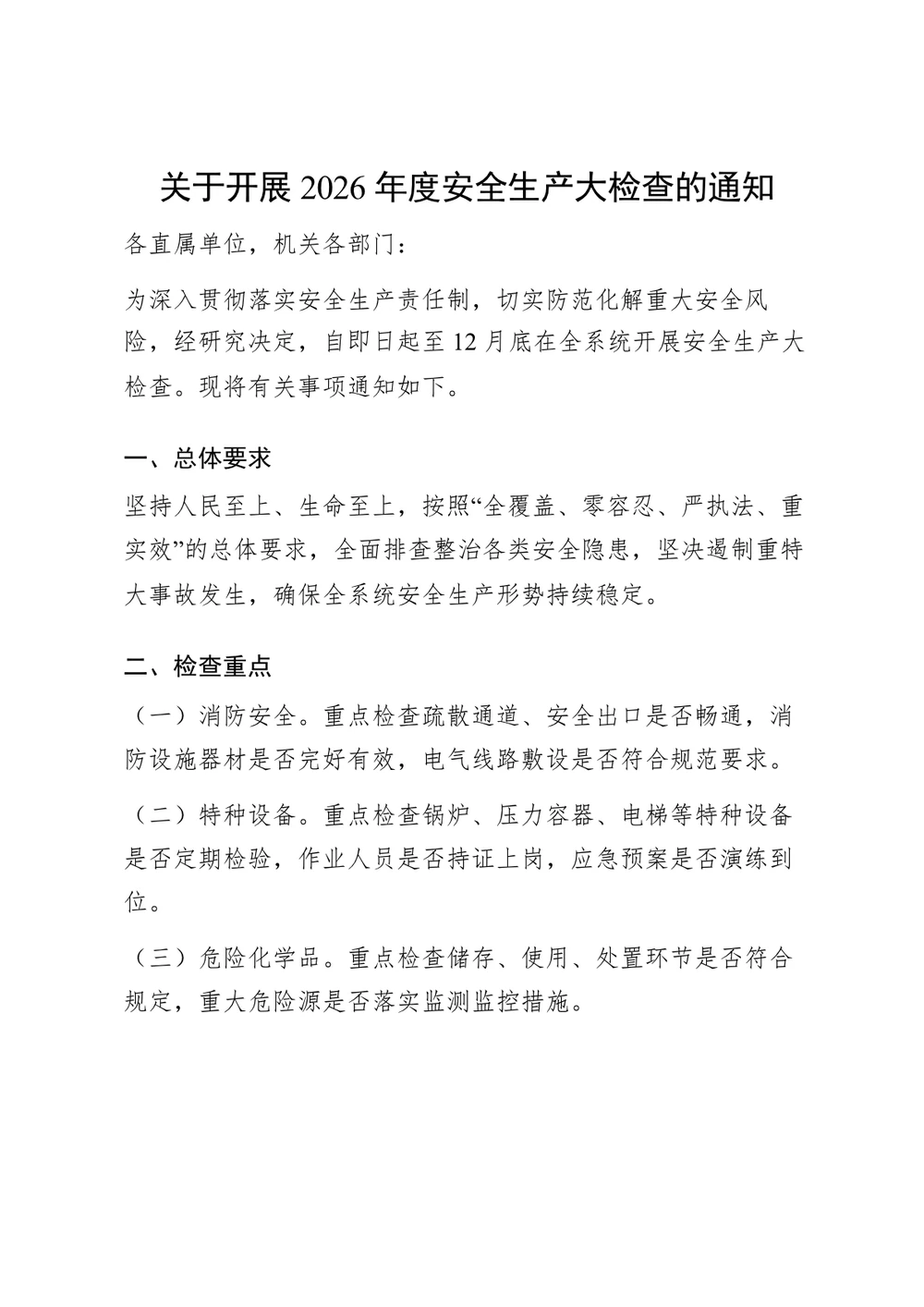
A4, the standard text area, a 22 pt Xiaobiaosong title, 16 pt FangSong body and fixed 28 pt leading. Runnable scripts for notices, requests, reports, letters, minutes, replies and opinions.

02

Theses: GB/T 7713 / 7714—2015

Cover, headers and footers, page numbers, contents, figure and table numbering and reference entries; the bibliography title can be changed to 参考文献.

03

Legal papers

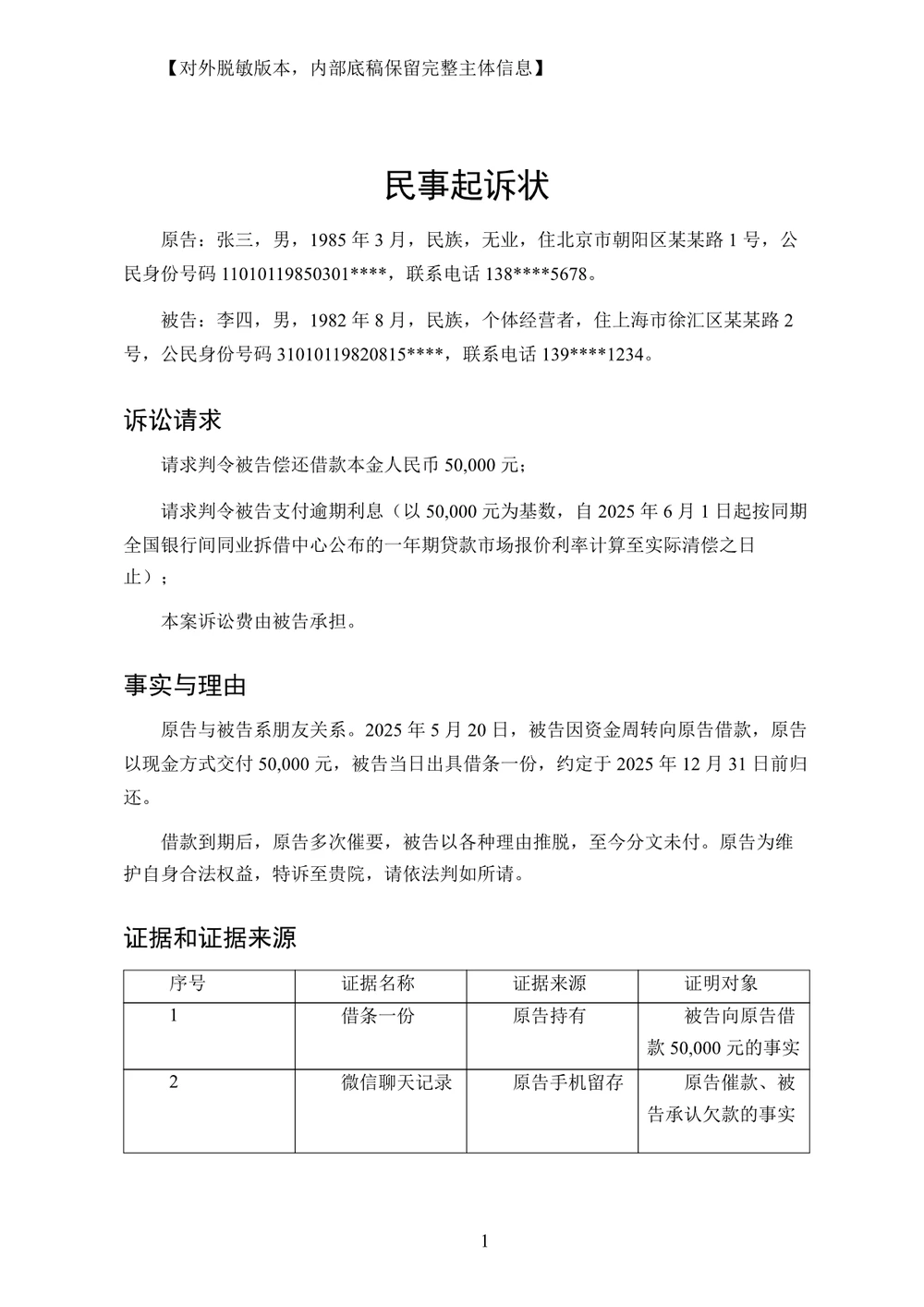
Civil complaints, demand letters, legal opinions, contract review reports and labour arbitration applications; redacted and internal versions from one source.

04

Counts, fonts and tags written correctly

Chinese counts by character (G2); eastAsia font and language attributes round-trip; when a font name is missing it resolves by candidate order and tells you which font it used.

05

One set of commands, two ways in

Home → Chinese Layout applies the same presets/ scripts the CLI runs; the ribbon and the terminal cannot drift apart.

06

Full source, thin fork, offline

crates/ is WordCraft itself; two general patches, internal identifiers unchanged, rebased on upstream. Native on Windows, macOS, Linux and BSD, web via WASM.

Screens

TTWriter in the interface

TTWriter interface screenshot 1
Official-document workspace · GB/T 9704 layout
TTWriter interface screenshot 2
Finished official document · text area, type size, leading
TTWriter interface screenshot 3
Civil complaint · legal preset
Position

A Chinese writing layer, not a localized build

Upstream already has a Simplified Chinese interface. Translating the menus gives you an English word processor with Chinese labels; the rules of Chinese writing are still missing.

01

A translation changes labels

Ribbon, dialogs and status bar in Chinese do lower the barrier. They do not decide the type size for an official document, the line spacing, or how a reference is formatted.

02

We add the rules

Four skills turn the national standards into executable commands; four presets apply page setup and default styles in one pass. Word count, fonts and language tags are written into the DOCX, so the file stays correct on another machine.

03

And we keep up

Upstream ships several releases a week. We keep two general patches, send the rest upstream and rebase; the fork does not drift away from the engine.

Roadmap

Work in progress

Shipped work is in the changelog. This is what is still on the way, or only just started.

01

Following upstream · in progress

Baseline v0.9.0; upstream has moved 287 commits since. Every release starts with a rebase and the 2,643-test suite, so the Chinese layer never blocks the engine.

02

Chinese default layer · in progress

A new document should start the Chinese way: East Asian fonts, A4 and a two-character first-line indent, instead of an English default the writer has to undo.

03

Chinese proofing · planned

Upstream proofing covers English, Russian, Polish, Portuguese and Italian. We will start with a dictionary and common typo patterns, then grammar; until then we do not claim it.

04

Pinyin sorting and Simplified/Traditional · planned

Indexes sorted by pinyin, and conversion by word rather than by character. Both need the same Chinese lexicon.

05

Chinese templates and PDF annotations · in progress

Templates for common Chinese documents; PDF page operations (rotate, delete, extract, merge) are already in the CLI, with annotations next.

Upstream

Credits

  • WordCraft · ArtCraft team —— The upstream word processor and all of its foundations; every line of the Chinese layer builds on it.
  • WordCraft Chinese interface —— The Simplified Chinese interface comes from upstream zh-hans, not from this edition.
  • craftrules —— Never crash, asset provenance, progress docs and the other engineering rules this repository follows.
  • Open fonts and word lists —— Inter, JetBrains Mono, Source Sans / Serif, the Moby hyphenation list and others; authors and licences are listed in ATTRIBUTION.md.
  • GB/T 9704—2012 · GB/T 7713 · GB/T 7714—2015 —— Layout rules are implemented from the public standards, without copying any commercial software's fonts, templates or code.
Versions

Changelog

  • v0.9.0-zh.1
    First public release · based on upstream v0.9.0
    • Four Chinese presets: general, official document, thesis, legal
    • A Chinese Layout entry in the ribbon, running the same scripts as the CLI
    • Four layout skills: official documents, theses, legal papers and a command reference
    • Chinese word count by character (G2), no longer split on spaces
    • w:rFonts / w:lang eastAsia round-trip; Word keeps the font and language tag
    • Fixed 仿宋_GB2312 silently falling back to a sans-serif on modern Windows
    • Fixed the thesis script order: contents and references before headers and footers
    • PDF page operations in the CLI: info / rotate / delete / extract / merge
    • Complete upstream source with the TTWriter identity and Chinese font fallback
Questions

FAQ

How is this different from a WordCraft translation?
Upstream already has a Simplified Chinese interface. A translation changes menu strings; TTWriter adds a Chinese writing-standards layer on the complete source: national-standard layout skills and presets, Chinese word counts, East Asian fonts and language tags, and it rebases on upstream.
Can it open .docx files?
Yes. DOCX read/write is core upstream work, alongside ODT, RTF, TXT and Markdown. Complex layouts can still differ; for important documents, export to PDF and check.
Does it work offline?
Yes, and it does not upload your manuscript. Font fallback, templates and skills are local; CLI and MCP only connect to this machine or a service you explicitly choose.
Why is there no Chinese spell check?
Upstream proofing covers English, Russian, Polish, Portuguese and Italian; Chinese is not implemented. It is on the roadmap, but we do not mark it as supported to fill a feature table.
What if 方正小标宋 is not installed?
It does not ship with Windows. The script resolves fonts in candidate order, falls back to a sans-serif and tells you; install the font and the title uses Xiaobiaosong.
What licence is it under?
Upstream code is MIT OR Apache-2.0; the skills, presets, tools and docs added here are Apache-2.0. The repository contains the full source, build scripts and upstream patches.
Which platforms are supported?
Native on Windows, macOS, Linux and BSD, with the web build via WASM. The first release is source-first; a Windows installer follows, and other platforms can build from source.
Legal

Disclaimer

TTWriter is a Chinese edition of WordCraft and is not affiliated with, or endorsed by, the ArtCraft team. WordCraft and related names belong to their respective owners; this project only states its origin in plain text.